
Picture the same resident, the same diet order, two days running. On Monday the meal is smooth, well shaped and safe. On Tuesday it is thinner, lumpier and harder to swallow. Nothing changed on paper – but everything changed on the plate.
This is kitchen variability, and it’s one of the biggest hidden risks in aged care food service. When texture-modified meals are made by hand, they change from cook to cook, shift to shift and day to day. That variation is not just a quality issue. For residents with swallowing difficulties, it can be dangerous.
Here’s where variability comes from, why it matters, and how to design it out.
Where variability comes from
Texture-modified food is hard to make well. In many aged care kitchens, a single texture-modified meal takes up to 23 separate steps to prepare, from cooking and blending to thickening, moulding and testing. Every one of those steps is a chance for the result to drift.
Now add real-world pressure. Kitchens are busy and often short-staffed. One cook thickens by eye, another follows a slightly different method. A new staff member was not trained the same way as the person they replaced. Portions vary. A batch gets rushed before service.
None of this comes from carelessness – it comes from a process that leans on human judgement, repeated hundreds of times a week, under time pressure. The more hands and steps involved, the more the final meal varies. And because texture is invisible until someone tries to swallow it, that variation often goes unnoticed until something goes wrong.
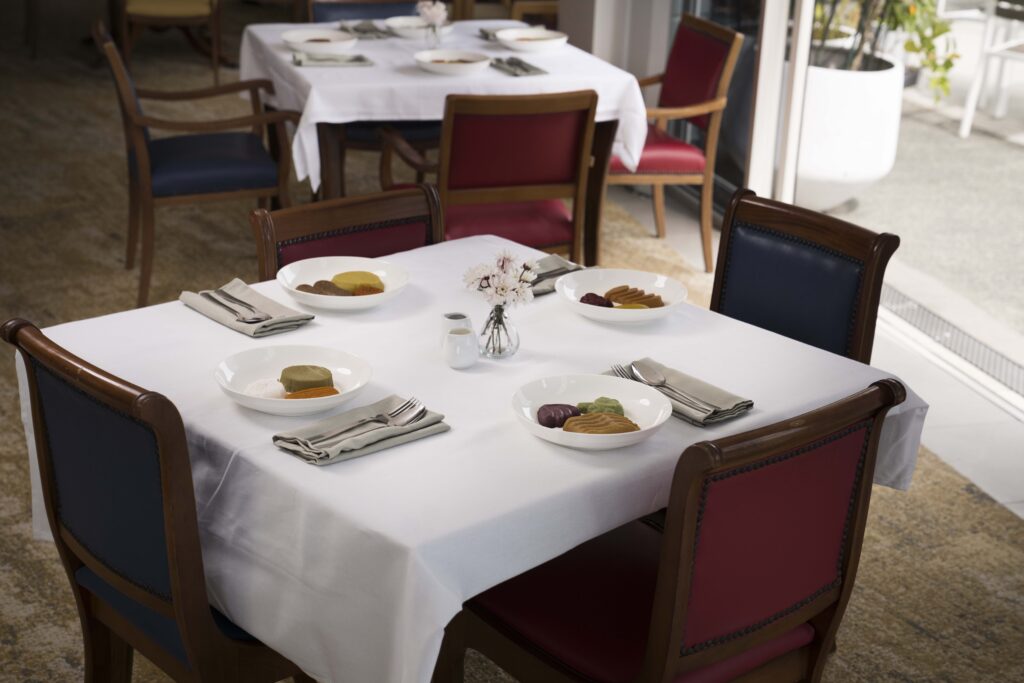
Inconsistent texture is a safety risk
This is where variability stops being a quality problem and becomes a clinical one. Up to half of aged care residents live with dysphagia, a difficulty swallowing that makes the wrong texture genuinely unsafe. For these residents, a meal that is even slightly too thin or too lumpy can lead to choking or aspiration.
The stakes aren’t theoretical; choking is the second most common cause of preventable death in Australian aged care facilities. In September 2025, Safer Care Victoria issued a patient safety alert after a spike in choking deaths, and named one key cause directly: residents being served food that didn’t match their assessed swallowing needs.
Inconsistent in-house preparation is exactly how that mismatch happens. A resident assessed for one IDDSI level is served something that has drifted to another, meal after meal, without anyone recording the change. Every extra step in the kitchen, and every unplanned variation, widens the gap between what a resident was assessed to eat and what actually reaches their plate.
Variable meals mean residents eat less
Safety is the sharpest risk, but variability harms residents in a quieter way too. When meals are inconsistent, they’re often unappealing – grey, watery, or nothing like the food they are meant to be. Residents notice. They eat less, and they lose weight they can’t afford to lose.
That matters because so many residents are already undernourished (up to 68% of aged care residents are malnourished or at risk of malnutrition). Every meal a resident leaves untouched makes that worse, feeding a cycle of lost muscle, more falls, slower healing and more hospital stays. A meal that varies in texture also varies in nutrition, so residents can’t reliably get the protein and energy they need. Consistency, then, is not only about safety; it’s about making sure every meal does the clinical job it is meant to do.
Standard 6 expects consistency you can evidence
Regulation has caught up with this reality. Since November 2025, the strengthened Aged Care Quality Standards treat food and nutrition as a clinical domain, with a dedicated Standard 6: Food and Nutrition. Providers must now show that meals are safe, nutritious and matched to each resident’s assessed needs – not just that food was served.
Variability makes that almost impossible to prove. If every meal is made a little differently, you can’t demonstrate that a resident reliably received the texture they were assessed for. You can’t evidence consistent nutrition. And when an auditor, a family member or a coroner asks what happened, “it depends who was cooking” is not an answer. Meeting Standard 6 means being able to show that your food is consistent, documented and clinically appropriate, every single day.
That’s a high bar for a manual, judgement-based process to clear.
How to design variability out
The good news is that variability is a design problem, and design problems can be solved. You don’t have to accept that meals will differ from cook to cook… you can build consistency in.
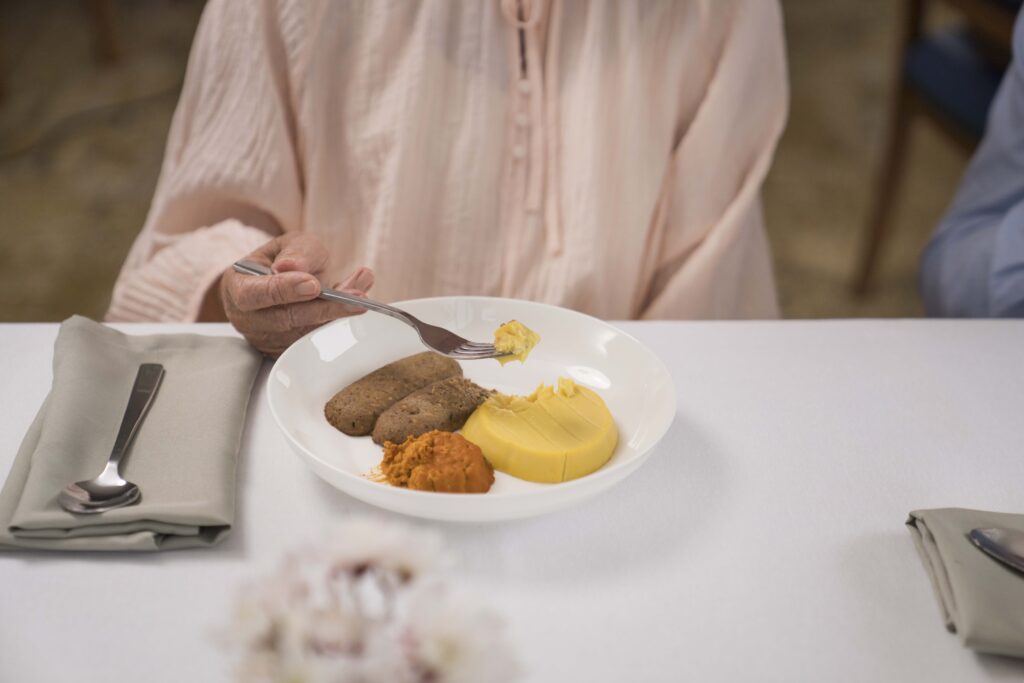
The most direct route is to remove the most error-prone steps from the kitchen altogether. Standardised, ready-to-serve texture-modified meals are produced to a controlled process and tested against their IDDSI level before they reach your facility, so a Level 5 Minced & Moist meal is the same every time. That takes pressure off your team and takes the guesswork out of safety.
The Pure Food Co pairs that consistency with staff training, menu design and digital reporting, so the whole system stays reliable as staff change and resident needs shift – you can see how it fits together on the solutions page. If you’re weighing up an external supplier, know exactly what to ask before buying texture-modified meals. And if you do prepare some texture-modified food in-house, the same principles apply: document your methods, train every staff member the same way, check each batch against its IDDSI level, and keep a record. The goal is simple – make the safe meal the automatic one, not the lucky one.
Consistency is a decision, not a hope
Kitchen variability is easy to overlook because it hides in plain sight, in the small daily differences between one cook and the next. But for residents who depend on a precise texture to eat safely, those differences add up to real clinical risk, real weight loss and real trouble at audit.
Consistency is not something to hope for at the end of a busy shift. It’s something you design in, through standardised production, clear methods and proper records. Get it right, and every resident gets the same safe, nourishing meal every day – which is exactly what the new standards, and your residents, expect.
To build more consistency into your food service, talk to The Pure Food Co.