
When someone you care for starts struggling at mealtimes, it isn’t always obvious what’s going on.
They might cough while eating, leave certain foods untouched or take much longer to finish a meal. Perhaps they’ve started losing weight without trying, or they seem tired and frustrated by food they once enjoyed.
These changes don’t automatically mean they need a texture modified or pureed diet. However, they can be signs of a swallowing difficulty known as dysphagia, and they’re worth discussing with a health professional. Recognising the early signs of dysphagia can help families and carers know when it’s time to seek advice.
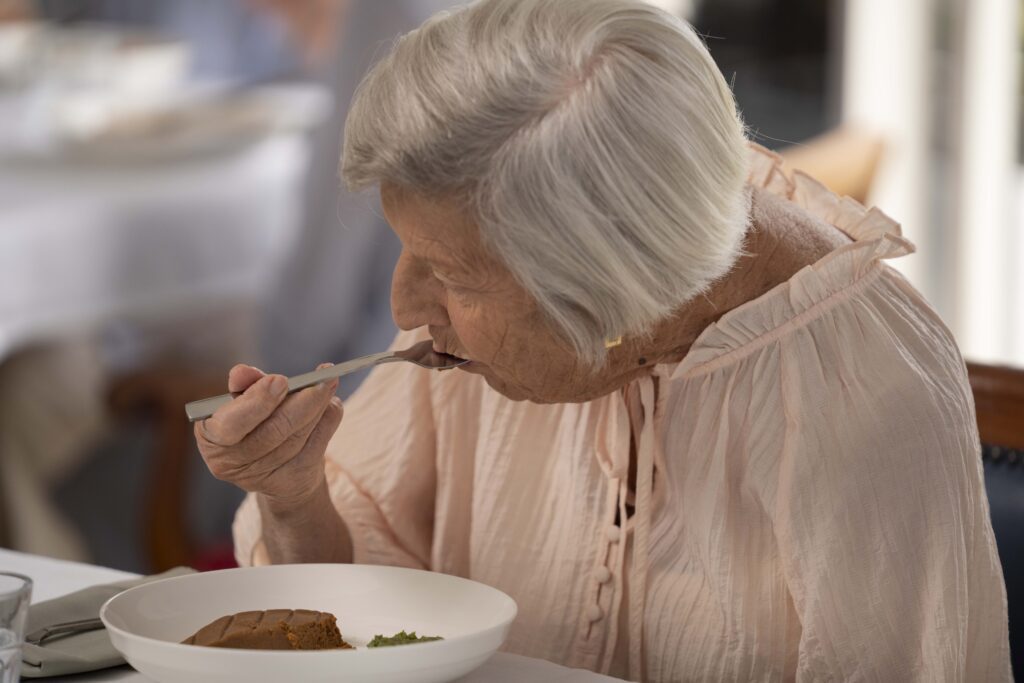
Warning Signs of Swallowing Difficulty
The signs and symptoms of dysphagia can look different from person to person. Some are obvious, while others can be easy to put down to ageing, tiredness or a reduced appetite. Here are some of the most common warning signs of dysphagia to look out for.
Coughing, choking or clearing the throat
Coughing during or shortly after eating and drinking is one of the more noticeable signs of dysphagia. You might also notice:
- Choking or gagging
- Frequent throat clearing
- Food or drink seeming to go down the wrong way
- Shortness of breath or changes in breathing during meals
- A wet or gurgly-sounding voice after swallowing
A single cough doesn’t necessarily mean there’s a swallowing problem. Repeated coughing or choking during meals, however, should be checked by a GP or speech pathologist.
Avoiding certain foods or textures
Someone with swallowing difficulties may begin avoiding foods that feel harder to manage. This could include:
- Tough or chewy meat
- Dry, crumbly foods
- Foods with skins, seeds or stringy pieces
- Mixed textures, such as soup containing chunks
- Hard or crunchy foods
They may cut food into very small pieces, add extra sauce, choose only soft dishes or say they’re no longer hungry when certain meals are served. Rather than being fussy, they may be quietly adapting because chewing or swallowing has become uncomfortable, tiring or worrying.
Taking much longer to eat
Meals that regularly take more than 30 minutes can be another warning sign. The person may need extra time to chew, pause frequently between mouthfuls or appear to work hard to swallow. They might also become tired before finishing and leave a large part of the meal uneaten.
Unexplained weight loss
Unplanned weight loss can happen when someone isn’t able to eat enough. They may be avoiding difficult foods, eating smaller portions or using so much effort at mealtimes that they can’t finish. Swallowing difficulties can also increase the risk of poor nutrition and dehydration when they aren’t properly assessed and managed. Other changes to look out for include loose-fitting clothes, reduced energy, weakness or a noticeable drop in appetite.
Food feeling stuck
Someone may describe food as sticking in their throat or chest. They might need several swallows to clear one mouthful or bring food back up after trying to swallow. Pain when swallowing, repeated chest infections and difficulty managing medication can also be signs that professional advice is needed.
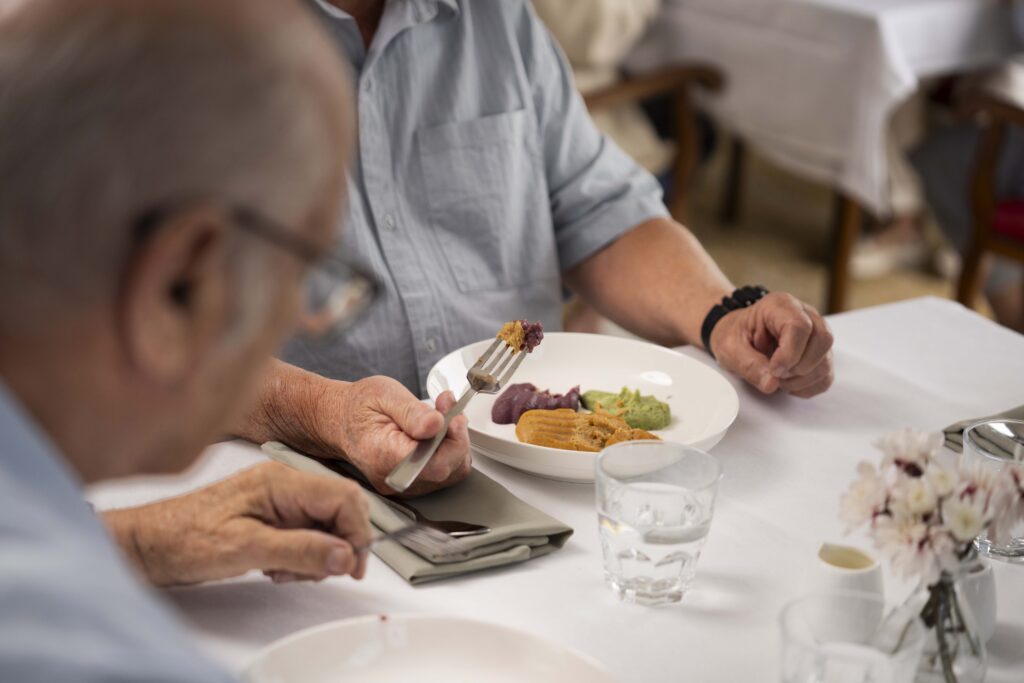
Signs of Dysphagia in Elderly People
The signs of dysphagia in elderly people can sometimes be subtle. An older person may not say that swallowing feels difficult. Instead, they might start eating less, avoid shared mealtimes, leave food on their plate or rely on softer foods without explaining why.
Families and carers may also notice:
- A gradual change in eating habits
- Increasing tiredness during meals
- More frequent coughing when eating or drinking
- Difficulty taking tablets
- Recurring chest infections
- Unexplained weight loss or dehydration
These changes shouldn’t simply be dismissed as a normal part of ageing. They can have several possible causes, so it’s important to arrange a professional assessment.
Why a Formal Assessment Matters
These signs can point to dysphagia, but they can also have other causes. A person shouldn’t be moved onto a pureed or texture modified diet based on observation alone. A GP can investigate what may be causing the problem and refer the person to the appropriate health professionals, while a speech pathologist can assess how safely and effectively they chew and swallow.
The assessment may consider:
- Which foods and drinks are difficult to manage
- Whether food or fluid may be entering the airway
- The person’s chewing ability
- Their posture, alertness and breathing during meals
- Whether a different food texture or drink thickness may help
A dietitian may also be involved to make sure the person continues receiving enough energy, protein and fluids. Changing food textures without an assessment can unnecessarily restrict the person’s choices. It may also fail to address the actual problem. The safest texture is the one recommended for that individual, based on their swallowing needs.
Does Swallowing Difficulty Always Mean Pureed Food?
No. IDDSI Level 4 – Pureed is only one type of texture modified diet. Depending on the assessment, a person may be advised to have IDDSI Level 6 – Soft & Bite-Sized, IDDSI Level 5 – Minced & Moist or IDDSI Level 4 – Pureed food. Some people may need changes to drinks as well as meals; others may not need a texture change at all. Their health professional may recommend a different seating position, smaller mouthfuls, a slower pace, swallowing exercises or treatment for an underlying condition.
What Happens Next?
Start by writing down what you’ve noticed. Include which foods cause difficulty, how often the person coughs, how long meals take and whether their weight or appetite has changed. Arrange an appointment with their GP or a speech pathologist and bring those notes with you. Don’t try to test different food textures by yourself while you wait; continue following any existing eating and drinking advice the person has been given.
Once an assessment has been completed, the person’s care team can explain whether a texture modified diet is needed and which level is right for them.
- You can read our guide to IDDSI levels and texture modified foods to understand how the different food textures are classified.
- For organisations looking for suitable meal options, explore The Pure Food Co’s texture modified product range.
When to get urgent help
Seek urgent medical help if the swallowing difficulty begins suddenly, particularly if it happens alongside facial weakness, arm weakness, confusion or changes in speech. Sudden difficulty swallowing can be a sign of stroke. In Australia, call Triple Zero (000).
This article provides general educational information only. It doesn’t replace an assessment, diagnosis or individual advice from a GP, speech pathologist, dietitian or other qualified health professional.