
Choosing a texture-modified meal supplier is a clinical decision, not a catering one. The right meals keep your residents safe, well fed and eating with dignity. The wrong ones put them at risk of choking, weight loss and hospital stays – and they put your facility on the wrong side of the strengthened Aged Care Quality Standards.
So, before you sign with any supplier, it pays to ask hard questions. This guide gives you several questions that separate a genuine clinical partner from a company that simply sells blended food. Use them in your next supplier meeting, and you’ll know exactly what your organisation is buying.
Ask how every meal meets IDDSI (and how they prove it)
Start with safety. Texture-modified food only works if it matches each resident’s assessed swallowing needs. The standard that governs this is IDDSI, the International Dysphagia Diet Standardisation Initiative. It sets clear, tested levels, from thin fluids through to soft and bite-sized, so a Level 5 Minced & Moist meal means the same thing in every kitchen.
Any supplier worth considering will build every product to a specific IDDSI level. Ask them to show you how. How do they test each batch? Who signs it off? Can they give you documentation that maps each meal to its IDDSI level?
A good supplier hands this over without hesitation. If the answers are vague, or the testing rests on an overstretched kitchen rather than a controlled process, treat it as a warning sign. It helps to know the levels before you meet suppliers, so you can ask sharper questions – our guide to IDDSI levels walks through each one.
Ask what’s in the meal, not just how it looks
A meal can look the part and still leave a resident undernourished. What matters is what’s inside it. Older people need more protein than most of us realise. Adults over 65 need roughly 1.2 to 1.5 grams of protein per kilogram of body weight each day, yet most aged care residents eat less than 0.8 grams per kilogram – barely half of what they need. Texture-modified diets often make that gap worse, because blending and diluting food can water down its nutrition.
So ask every supplier for the numbers. How much protein is in each serve? Is the food fortified to close the gap, or simply blended and shaped? Are the meals designed by dietitians as well as chefs? Ask to see the nutrition information for the exact products you would serve, not a general brochure. The right partner talks about protein, energy and micronutrients as readily as they talk about flavour (you can see how one range approaches this on The Pure Food Co products page).
Ask how they guarantee the same texture every time
Consistency is not a nice-to-have – it’s a safety control. If a pureed meal is smooth one day and lumpy the next, the resident who relies on it is put at risk. Inconsistent texture is one of the reasons choking remains the second most common cause of preventable death in Australian aged care facilities.
When meals are made by hand, one plate at a time, some variation is almost unavoidable. So ask how the supplier removes it. Do they produce to a controlled, repeatable process? Is every batch checked against its IDDSI level before it leaves the door? What happens when something falls outside that standard?
You want a supplier who treats consistency as a measurable control, not a matter of who is on shift. We look at this in more detail in the impact of kitchen variability on meal quality and safety.
Ask whether residents will actually eat it
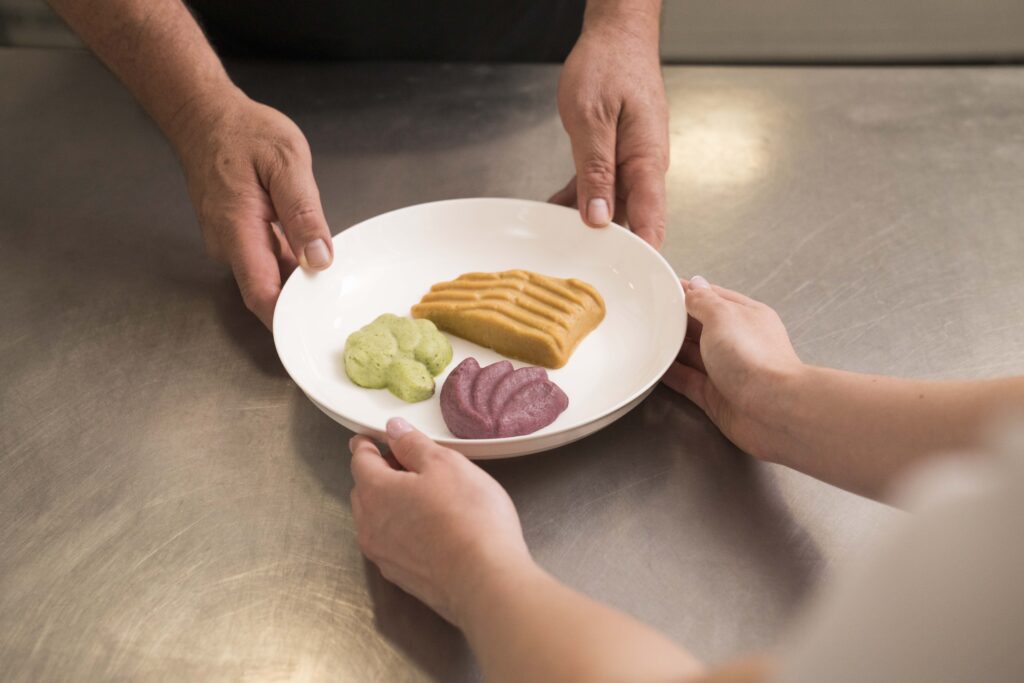
Safe, nutritious food only helps if it gets eaten. Too often, texture-modified meals arrive grey, flat and unrecognisable, so residents push them away and lose weight they can’t spare. Appearance, flavour and variety are not extras – they decide whether a resident finishes their plate.
Ask each supplier how they make food people want to eat. Are pureed meals shaped and plated to look like real food? How many flavours and combinations are on the menu? Can residents on a texture-modified diet still get choice and variety across the week?
Facilities serving The Pure Food Co report that diners eat up to 40% more when the food looks and tastes the part. Ask for that kind of evidence. If a supplier can’t tell you how their food drives intake, they’re selling you a product rather than an outcome.
Ask what support comes with the food
The food is only half the job… your team still has to store it, plate it, match it to the right resident and record it all correctly. A supplier who drops off frozen meals and leaves is adding to your workload, not reducing it.
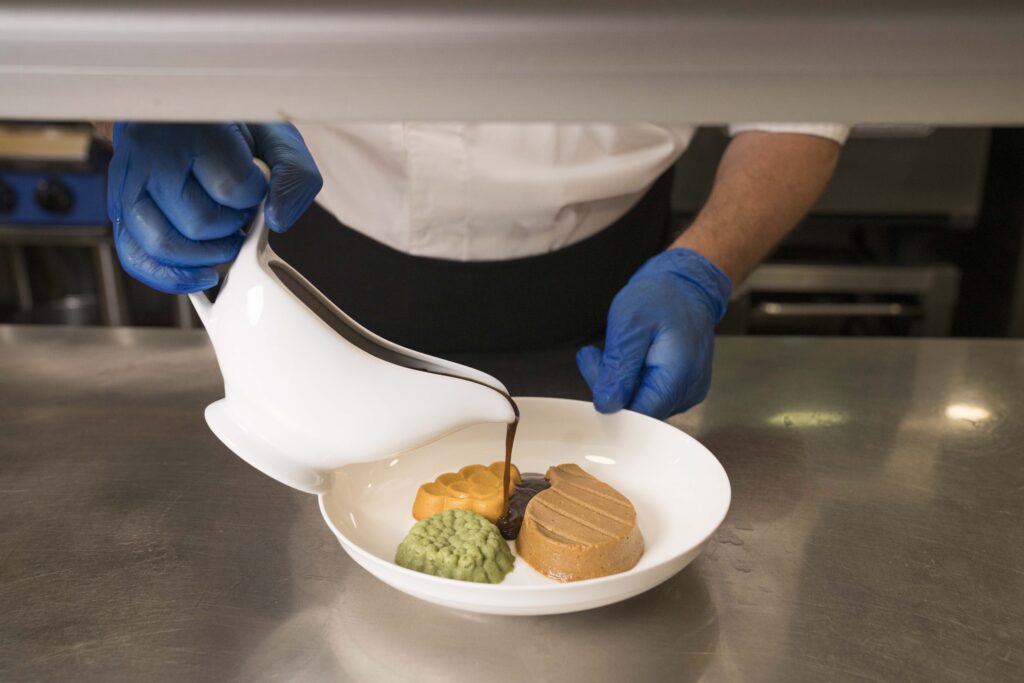
So, ask what comes with the meals. Do they train your kitchen and care staff? Will they help you design menus around clinical needs and resident preferences? Do they support you through the change, so the switch doesn’t fall apart in week three? Ask how they handle a complaint, or a new resident with complex needs. The strongest partners wrap support, training and menu design around the food (you can see how this process works on The Pure Food Co solutions page). That support is what turns a good product into a reliable system.
Ask for the data
You can’t manage what you can’t see. Under the new standards, you’re expected to show that your food actually improves residents’ health – not simply that it was served. That’s hard to do when all you have is delivery dockets.
Ask each supplier what data they give you. Can they show you what residents are eating, and what they are leaving? Can you see consumption, cost and clinical trends at a glance? Can you spot a resident losing weight before it becomes a crisis? A supplier with real digital reporting helps you act early and prove your food is working… one who can’t is asking you to run a clinical service blind.
Ask how it helps you evidence Standard 6
Since November 2025, food and nutrition sit within the strengthened Aged Care Quality Standards as a clinical domain, with a dedicated Standard 6: Food and Nutrition. Providers must show that meals are safe, nutritious and support residents’ health and wellbeing. Ask each supplier a plain question: how do you help us meet Standard 6? The right partner points to IDDSI documentation, nutrition data and reporting that slot straight into your evidence… the wrong one won’t know what you’re asking.
Your questions, in one place
Buying texture-modified meals is one of the most clinical decisions your facility makes. Keep these simple questions on hand for your next supplier meeting: how they meet IDDSI, what’s in the meal, how they guarantee consistency, whether residents will eat it, what support comes with it, what data you get, and how it helps you evidence Standard 6. Ask them of every supplier, and the right partner stands out fast. To put these questions to The Pure Food Co, get in touch.